




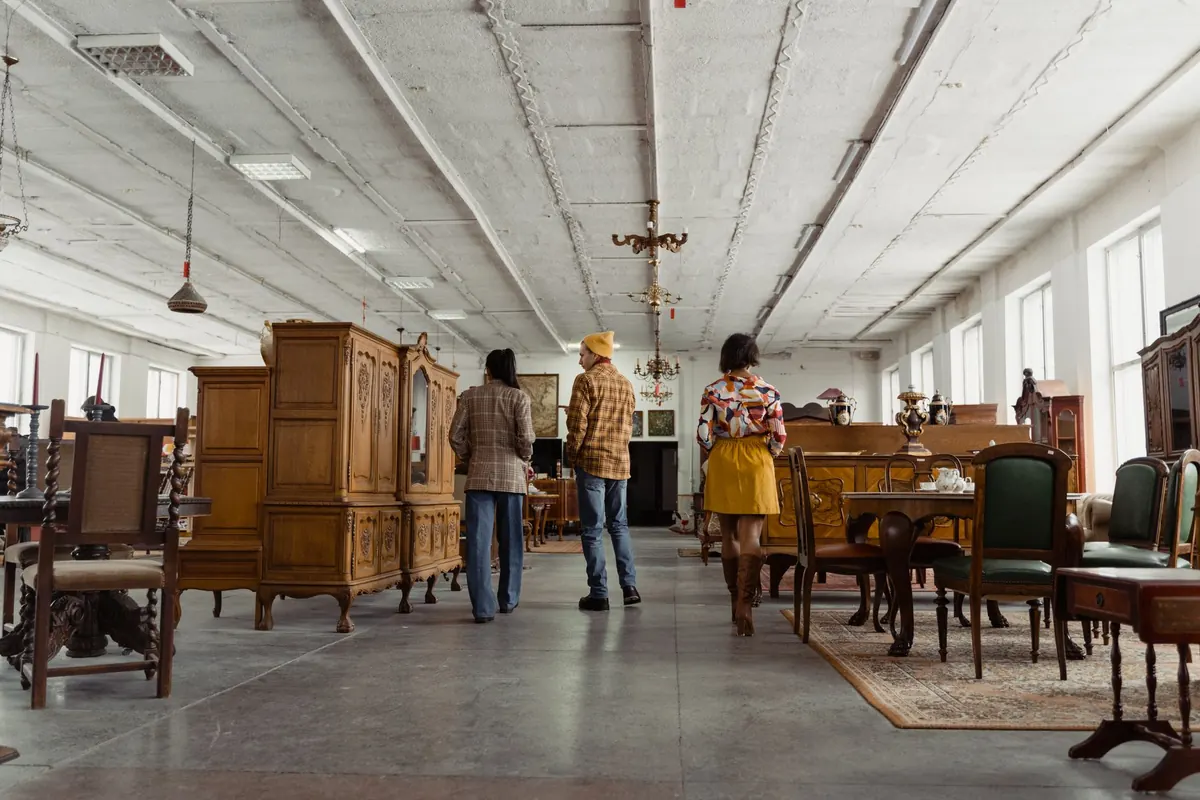
A solid chest of drawers made sixty years ago will outlast most of what you can buy flat-packed today, provided the piece in front of you has been looked after. The trouble is that age and quality are not the same thing. Plenty of old furniture is tired, damp, or held together by hope and old glue.
The good news is that you don't need to be an antiques expert to shop well second-hand. You need an order of inspection, a torch, and a willingness to kneel on the floor. Work through the checks below before you fall for a finish.
Start With the Joints, Not the Shine
A polished top catches the eye. The joints decide whether the piece survives another decade, so look at those first.
Push the piece gently from a top corner. A rigid frame moves as one; a loose one rocks, creaks or twists. On chairs, press down on the front corners of the seat and sit in it for a minute. Legs should meet the seat without any play.
- Drawer corners: look for dovetails, the interlocking wedges that join the sides to the front. Hand-cut ones look irregular, machine-cut ones uniform. Both are fine. Gaps, wobble, or a corner held only by nails and filler are not.
- Old repairs: a reglued joint or a neat wooden brace can hold for years. That's normal. Screws driven through the outside of a joint, fresh glue squeeze-out, or filler packed into a crack tell you the repair was rushed.
- Runners: the wooden strips a drawer slides on wear thin over time. Heavy black scoring or a step worn into the runner means that drawer will always sag.
- The base: check feet and bottom rails for splits, rot and crush damage from being dragged across floors.
Reading the Wood
Run a flat hand across the surface. Grain should feel continuous; veneer that has started to lift reads as a ripple under your palm. Sight along the edges with a torch held low and you'll spot lifting patches before they become chips.
Some flaws are easy to live with. A small chip on a corner, a water ring or scratches on a top can be waxed, oiled, or covered with a runner. Others are not. Check for splits at the ends of boards, where wood moves most with humidity, and look for sun-fading by shifting anything that has been sitting on the surface.
Then look for woodworm: small round holes, often with fine dust around them. Old holes are common and usually harmless if the piece is dry and has been treated. Fresh dust falling from them means active insects, and that's a reason to walk away.
Upholstery: Look Under the Cushions
Lift every cushion and press the seat deck beneath them. It should feel taut. Soft spots mean stretched webbing or broken springs, and both are a bigger job than re-covering.
Feel through the fabric at the arms, the back and the front edge of the seat to find the frame. Sharp edges under cloth usually mean the padding has collapsed. Look for pet hair, stains, snags and sag at the arm fronts.
Then ask the practical question: will you live with it as it is, or will you reupholster? If it's the latter, remember that the labour usually costs more than the fabric. A chair with a sound frame is worth that spend; a wobbly one generally isn't.
Use Your Nose
Smell is the fastest route to problems you can't see. Open the drawers, lift the seat, put your head inside the carcass and sniff the back panel.
Three smells matter most:
- Damp and musty: the classic cellar or garage smell, and the one that can mean mould in the wood and stuffing. It rarely disappears completely.
- Tobacco and pets: smoke and urine soak into foam, fabric and raw timber. Airing helps a little; replacing the filling is often the only real fix.
- Fresh polish or mothballs: strong chemical scents can be covering something up. Ask what was used and when.
If there's any sign of mould and you have allergies or a lung condition, get proper advice before bringing the piece indoors. Odour is also a bargaining point: a piece that reeks of smoke is worth less than one that doesn't, whatever its label says.
Drawers, Doors and Moving Parts
Pull every drawer all the way out and push it back. It should run smoothly and close flush. Sticking is usually swollen wood or a dirty runner, often fixed with a rub of candle wax. A drawer that drops as it opens is a different story: worn runners, and it will always need a hand.
Check drawer bottoms for splits and sag. Open doors and look at the hinges and the gap around the edges, because a warped door usually means a warped carcass. Locks, keys and castors are nice to have; ask whether they exist and whether they work. Glass, marble tops and mirror plates are costly to replace, so inspect them for chips and old repairs.
Ask Before You Commit
A few questions will tell you more than an hour of guessing:
- Where has it been kept, a house or a damp garage?
- Has it been repaired, refinished or reupholstered, and when?
- Does it come apart, and do you have the fixings?
- Are there keys, shelves or other original parts?
- Is the price firm if I collect it myself?
Answers won't always be complete, but the way someone answers tells you plenty. A seller who lets you turn the piece over and look underneath is usually a seller worth buying from.
The Ten-Minute Check Before You Pay
Measure the space, then measure the route: doorways, the turn on the stairs, the hallway. A chest of drawers that suits the wall you have in mind may still not fit through the front door.
Bring a torch for the underside and the back, a tape measure, and if possible a friend who will help you tilt the piece and talk you out of a purchase you've become attached to. Look at it in daylight rather than under shop lighting, which flatters everything.
Then buy the sound piece over the pretty one. Scratches, faded polish and tired fabric can all be dealt with later, at your own pace, over a few weekends. A twisted frame, active woodworm or a deep smell of damp cannot. If the bones are good, you'll still be using it in twenty years.
Photo: Tima Miroshnichenko / Pexels
Related posts
More stories you’ll love reading