


A single ceiling light does a strange thing to a small living room. It floods the middle of the floor with brightness, throws your shadow across the coffee table, and leaves every corner dim and flat. The room doesn't read as bright. It reads as cramped. Layering fixes that, and it's less about buying more lights than about giving each one a clear job.
The Three Layers, Explained Simply
Designers talk about layered lighting as though it were a secret code. It isn't. There are three jobs to fill, and a small room needs all three.
- Ambient light — the general wash that lets you see across the room without squinting.
- Task light — focused light where you read, knit, or work on a laptop.
- Accent light — small pools of light that add depth and give the eye somewhere to rest.
Most small living rooms have only the first, and usually in the least flattering form: one fixture in the centre of the ceiling. Add the other two at different heights and the room gains shape. Corners stop disappearing. Walls feel further away than they are.
Before You Buy Anything, Map the Room
Ten minutes with a tape measure and your phone camera will save you from buying the wrong lamp. Walk the room as you normally use it and note three things.
- Where you sit. Your sofa, your armchair, the spot on the floor where you drink coffee on a Sunday. These are the places that need task light.
- Where the outlets are. A floor lamp is useless if its cable has to stretch across a doorway. Note which corners have a socket nearby, and which would need a slim extension lead tucked behind furniture.
- What you want to show off. A bookshelf, a print above the sofa, a plant that's finally thriving. These become your accent spots.
Layer One: Ambient Light You Can Dim
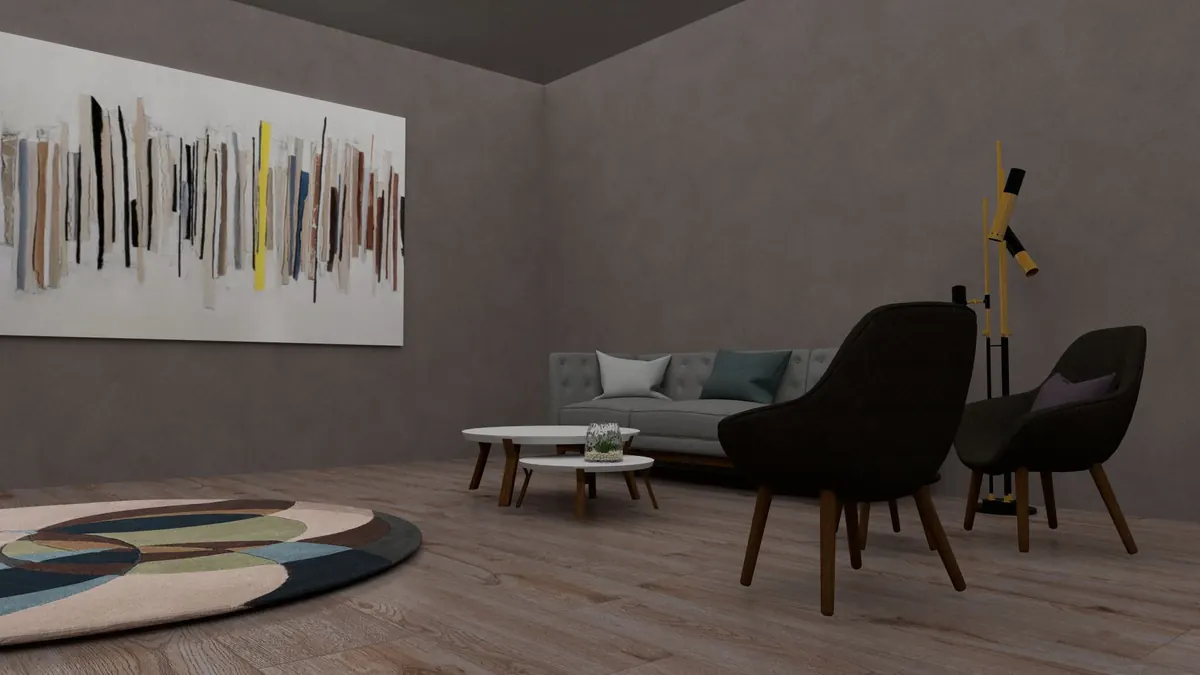
In a small room, ambient light works best from about seated eye level or slightly above — not from the ceiling pointing down at you. A floor lamp with a wide, bowl-shaped or drum shade placed in a corner behind the sofa does this beautifully. It bounces light off two walls at once, which makes the room feel wider than it is.
Look for a shade roughly 40 to 45 centimetres across on a stand around 150 to 165 centimetres tall, so the light sits just above your line of sight when you're sitting down. Tall, narrow uplighters are tempting in tight spaces, but they throw light at the ceiling and leave the floor in shadow — the opposite of what you want.
Bulbs matter more than the lamp
Match the colour temperature across every fitting in the room. Warm white, around 2700K, is the safe choice for living rooms; it flatters skin tones and wood floors. If you need a sharper light for reading or sewing, put a 3000K bulb in that one lamp only — and keep it out of the ambient fitting. Dimming is the other half of the job. A dimmable bulb plus a dimmer switch, or a smart plug you can control from your phone, lets one lamp do the work of three.
Layer Two: Task Light Where You Actually Sit
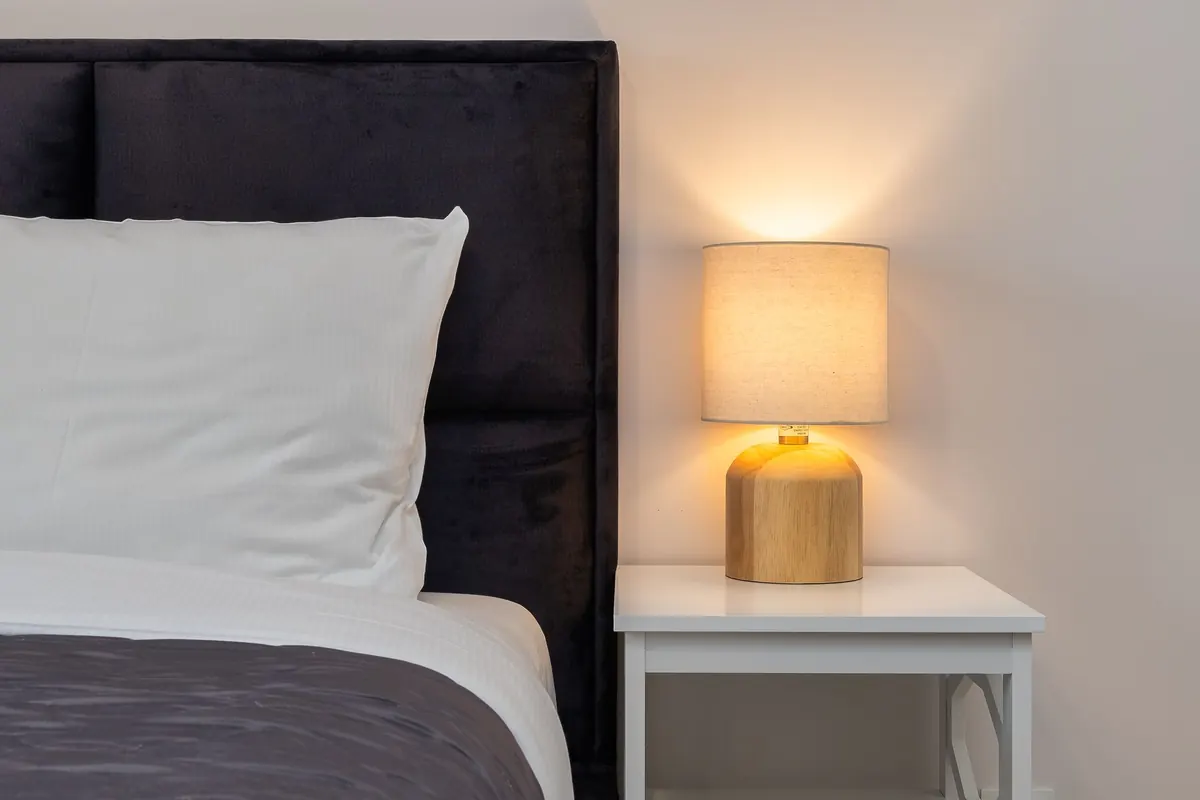
Task lighting is the layer people skip, and it's the one that makes a room usable after dark. The rule of thumb is simple: the bottom edge of the lampshade should sit at roughly eye level when you're seated, so the bulb never glares into your face while the page below stays bright.
On a side table, that usually means a lamp around 50 to 60 centimetres tall. If there's no room for a table, a slim floor lamp with an adjustable arm slid between the chair and the wall works just as well. In genuinely tight spots — a narrow gap beside a chimney breast, say — a swing-arm wall light takes up no floor space at all and can be folded flat when it's not in use.
Layer Three: Wall Lights and Accent Pools for Depth
Wall lights earn their place in small rooms because they occupy nothing you could otherwise walk on. A pair flanking a piece of art, a slim plug-in sconce above a reading chair, or a picture light over a shelf all add a soft vertical glow that stops the upper half of the room going dark.
For accent light, think in pools rather than in coverage. A small lamp on a bookshelf, a low table lamp behind a plant, a warm bulb in a corner where nothing else happens — each one breaks up the darkness and gives the room a sense of distance. Two or three small pools will do more for a cramped room than one very bright light ever will.
The Habits That Keep It Looking Calm
- Aim for four sources, minimum. One ambient, one task, two accents is a good starting split.
- Light the edges, not the middle. Corners and walls are where light does the most work.
- Keep the colour temperature consistent. Mixed warm and cool bulbs make a room look unsettled.
- Put everything on dimmers or smart plugs. Evening light should sit lower than daytime light.
- Hide the cables. Adhesive clips, a cable spine, or a strip of trunking along the skirting will do it.
A Weekend Setup You Can Copy
Start with the corner behind your sofa. Add a wide-shaded floor lamp there with a warm, dimmable bulb, and leave the ceiling light switched off for a week to see how the room feels. Then place a table lamp beside the seat you use most, checking the height against your eyeline. Finally, add one small accent light somewhere the room currently goes dark — a shelf, a plant, a bare wall.
Live with three lights before you buy a fourth. You'll quickly notice which corner still feels gloomy and which one now does too much, and that's exactly the information you need. Layering a small living room isn't a decorating project so much as a series of small corrections, and each one makes the room feel a little larger than the last.
Photo: Pușcaș Adryan / Pexels
Related posts
More stories you’ll love reading